
The Complete Guide to Planning a Successful Trade Show Exhibit
A successful trade show exhibit begins with a clear strategy and continues through design, budgeting, logistics, installation, staffing, and post-event follow-up.

Participating in a trade show can create valuable opportunities for brand exposure, lead generation, networking, product launches, and business growth. However, successful participation requires much more than booking booth space and sending a few employees to the event. Without proper planning, businesses may face unnecessary expenses, missed deadlines, weak visitor engagement, and disappointing results.
A successful trade show exhibit begins with a clear strategy and continues through design, budgeting, logistics, installation, staffing, and post-event follow-up. Planning each stage in advance helps businesses create a professional presence and make better use of their exhibition investment.
Define Your Trade Show Objectives
The first step in trade show planning is deciding what the business wants to achieve. Every event may have a different purpose, and the exhibit should be designed accordingly.
Common objectives include:
- Generating qualified leads
- Launching a product
- Increasing brand awareness
- Meeting existing customers
- Finding distributors
- Entering a new market
- Recruiting business partners
- Demonstrating products
- Scheduling sales appointments
Objectives should be specific enough to measure. For example, instead of simply aiming to “generate leads,” a company may set a goal to collect a certain number of qualified contacts or schedule a specific number of meetings.
Clear objectives help guide decisions about booth size, layout, staffing, technology, and marketing activities.
Research the Trade Show Audience
Every trade show attracts a different audience. Some events focus on technical professionals, while others attract buyers, distributors, executives, consumers, or industry media.
Businesses should research:
- The event’s target audience
- Typical visitor profiles
- Industry sectors represented
- Competitors attending
- Educational sessions
- Product categories
- Visitor expectations
- Exhibition floor layout
Understanding the audience helps the business create relevant messaging and displays.
For example, an industrial event may require technical demonstrations and product specifications. A consumer exhibition may benefit from product trials, visual displays, and promotional activities. A B2B event may require meeting rooms and consultation areas.
Set a Realistic Budget
A trade show budget should include more than booth construction. Many costs are associated with exhibiting, and overlooking them can create financial pressure.
The budget may include:
- Booth design
- Exhibit fabrication
- Graphics
- Flooring
- Furniture
- Lighting
- Technology
- Shipping
- Material handling
- Installation
- Dismantling
- Staff travel
- Promotional materials
- Lead capture tools
- Event services
Businesses should also allow room for unexpected expenses. Venue rules, last-minute changes, additional labor, or shipping issues may affect the final cost.
A clear budget helps the exhibit team recommend suitable materials and design features.
Choose the Right Booth Space
The location and size of the booth can influence visibility and visitor traffic. Businesses should consider the exhibition floor plan and the position of nearby attractions.
Potential factors include:
- Main entrances
- Food and beverage areas
- Educational stages
- Registration areas
- High-traffic aisles
- Competitor locations
- Hanging signs
- Corner or island access
A larger booth is not always necessary. A well-designed smaller booth may perform effectively when the layout and message are strong.
The selected space should support the company’s objectives and budget.
Develop the Exhibit Concept
Once the goals, audience, budget, and space are established, the exhibit concept can be developed.
The concept should include:
- Brand identity
- Main message
- Product priorities
- Visitor flow
- Display zones
- Meeting areas
- Storage
- Technology
- Lighting
- Graphics
The design should balance creativity with functionality. A booth that looks impressive but does not provide space for conversations may not support business goals.
A clear concept also makes it easier to coordinate the design, fabrication, and installation teams.
Use 3D Designs and Floor Plans
3D visualization helps businesses understand how the final exhibit may look before production begins. It also allows the client to review the design and request changes early.
A 3D rendering can show:
- Booth proportions
- Branding placement
- Graphic visibility
- Product displays
- Furniture
- Lighting
- Meeting spaces
- Architectural elements
Floor plans are equally important because they show how people will move through the booth. Together, 3D visuals and floor plans help ensure that the exhibit is attractive and practical.
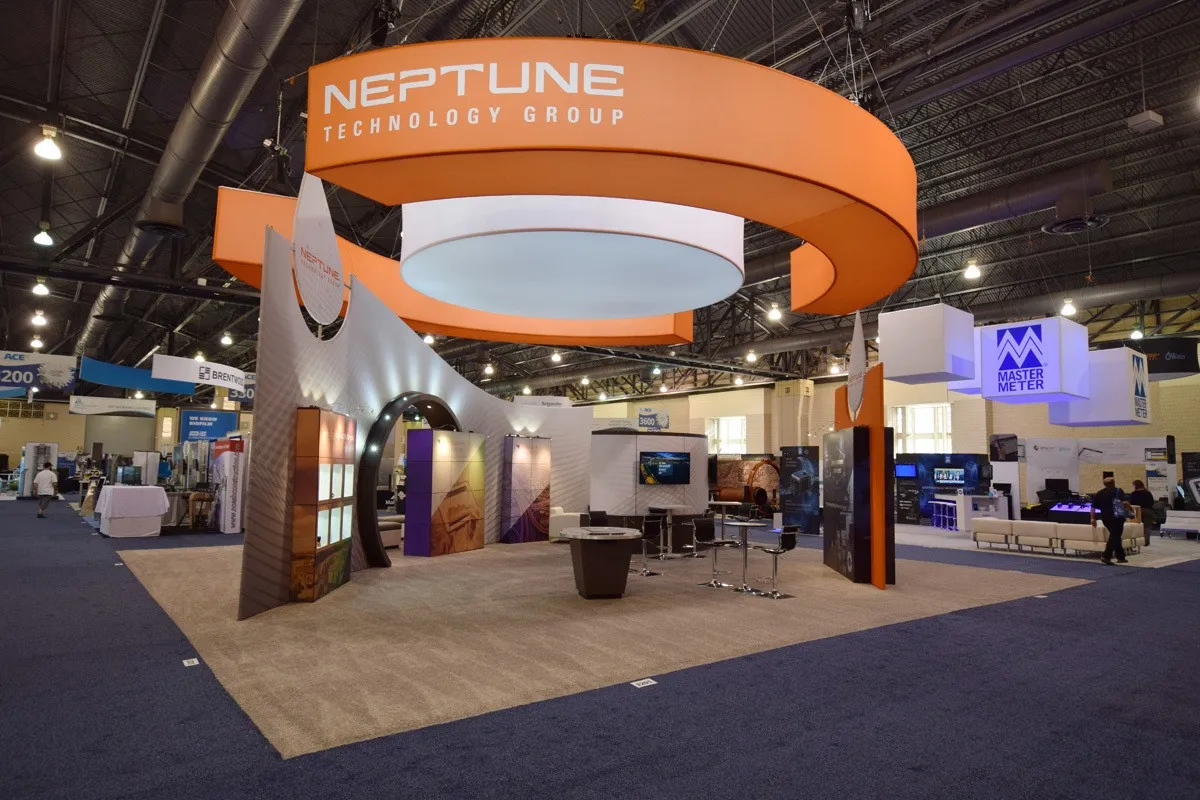
Plan Graphics and Messaging
Graphics should be created with the trade show environment in mind. Visitors may view the booth from a distance and may only have a few seconds to understand the message.
Important graphic elements include:
- Company name
- Logo
- Main headline
- Product images
- Key benefits
- Supporting messages
- Contact information
- Call to action
Avoid overcrowding the booth with long paragraphs. Use clear headlines and relevant visuals.
The graphics should also be consistent with the company’s website, brochures, advertising, and social media.
Prepare Products and Demonstrations
If the exhibit includes products, samples, or demonstrations, preparation should begin early.
Businesses should confirm:
- Which products will be displayed
- How products will be transported
- Whether demonstrations require electricity
- Whether additional safety measures are needed
- What supporting materials are required
- Who will explain the products
- How products will be secured after the event
Demonstrations should be rehearsed before the show. Staff should be able to explain the main benefits clearly and answer common questions.
Plan Staffing and Training
Staff members are an important part of the visitor experience. They should understand the company’s objectives and know how to engage visitors professionally.
Training should include:
- Product knowledge
- Key messaging
- Visitor greeting
- Lead qualification
- Demonstration procedures
- Lead capture
- Appointment scheduling
- Follow-up expectations
Staff should avoid standing together in groups, using phones constantly, or ignoring visitors. A professional and welcoming presence encourages engagement.
Organize Logistics and Deadlines
Trade show logistics can be complex. Businesses must coordinate shipping, material handling, installation, venue rules, and return transportation.
Important deadlines may include:
- Booth design approval
- Graphic production
- Advance warehouse delivery
- Electrical orders
- Internet orders
- Furniture orders
- Shipping
- Installation
- Show opening
- Dismantling
- Return freight
A detailed timeline helps prevent last-minute problems.
Prepare Marketing Before the Event
Pre-show marketing can help increase booth traffic. Businesses should inform customers, prospects, partners, and followers that they will be attending the event.
Promotional activities may include:
- Email invitations
- Social media announcements
- Website banners
- Appointment booking
- Product launch previews
- Partner outreach
- Event-specific landing pages
Visitors are more likely to stop by when they already know what the company will be presenting.
Plan Lead Capture and Follow-Up
Lead capture should be prepared before the show begins. Businesses should decide what information they need and how it will be recorded.
Useful details may include:
- Name
- Company
- Job role
- Phone number
- Product interest
- Purchase timeline
- Next action
After the event, leads should be categorized and followed up promptly. The follow-up message should reflect the conversation that took place at the booth.
Review Results After the Event
Post-event analysis helps businesses understand what worked and what needs improvement.
Review:
- Booth traffic
- Qualified leads
- Meetings
- Product inquiries
- Sales opportunities
- Visitor feedback
- Marketing performance
- Expenses
- Staff observations
These insights can improve future trade show planning.
Conclusion
Successful trade show participation requires careful planning from the earliest concept stage through post-event follow-up. Businesses should define their objectives, understand their audience, prepare a realistic budget, create a strategic booth design, manage logistics, train staff, and measure results.
A well-planned exhibit can improve brand visibility, visitor engagement, and lead quality while reducing unnecessary stress.
Purple Exhibits supports businesses with complete trade show exhibit company Boston solutions, including design, fabrication, graphics, logistics, installation, and dismantling. For professional exhibit planning, contact Purple Exhibits at (800) 994-8030 or email info@purpleexhibits.com.












Comments
0 comment