
Cardboard Mailer Boxes vs. Corrugated Mailer Boxes: Which Is Better?
Compare cardboard mailer boxes vs. corrugated mailer boxes to discover differences in durability, sizes, printing, shipping protection, and cost for your business.

Cardboard Mailer Boxes vs. Corrugated Mailer Boxes
Choosing between cardboard mailer boxes and corrugated mailer boxes depends on the products you sell, how you ship orders, and the level of protection your packaging needs. Both options can be customized with logos, brand colors, and printed designs, but their material construction and performance differ.
For e-commerce stores, subscription services, retail brands, and wholesale businesses, understanding these differences can help control packaging costs and improve the customer experience. While lightweight cardboard mailers can suit products that need minimal protection, corrugated mailers are often a better choice for shipments that require additional strength and cushioning.
What Are Cardboard Mailer Boxes?
Cardboard mailer boxes generally refer to mailers made from solid paperboard or folding carton board. These materials provide a smooth surface for printing and are commonly used for lightweight products that do not require substantial cushioning during delivery.
Custom cardboard mailer boxes can be designed with tuck-in flaps, locking tabs, and other closures to keep products organized during handling. Businesses often choose them for lightweight merchandise, promotional materials, and products that already have protective inner packaging.
Typical applications include:
-
Greeting cards, stationery, and printed materials
-
Lightweight clothing accessories
-
Small beauty products in protective containers
-
Promotional kits and product samples
-
Flat retail products and lightweight merchandise
One of the main advantages of solid paperboard is its print-friendly surface. Brands can use full-color graphics, product information, logos, and minimalist designs to create a professional appearance.
However, solid paperboard mailers generally provide less cushioning and resistance to crushing than comparable corrugated constructions. They may not be suitable for heavy, fragile, or easily damaged products without additional protection.
What Are Corrugated Mailer Boxes?
Corrugated mailer boxes are manufactured from corrugated board, which contains a fluted paper layer between flat liner sheets. This layered construction creates a stronger structure that can provide cushioning and resistance to compression.
Custom corrugated mailer boxes commonly feature integrated flaps and locking closures, making them useful for e-commerce fulfillment and direct-to-customer shipping. They can be produced in different sizes and board grades to accommodate various products.
Common applications include:
-
Skincare collections and cosmetic kits
-
Candles and selected glass products with suitable inserts
-
Subscription boxes containing multiple items
-
Apparel bundles and retail merchandise
-
Electronics accessories and small household products
-
Gift sets and promotional packages
Corrugated mailers are available in different flute profiles and board strengths. The appropriate specification depends on the product's weight, dimensions, fragility, stacking conditions, and shipping environment.
Although corrugated board offers useful structural protection, it does not eliminate the need for proper inserts or cushioning when shipping fragile products.
Cardboard Mailer Boxes vs. Corrugated Mailer Boxes: Key Differences
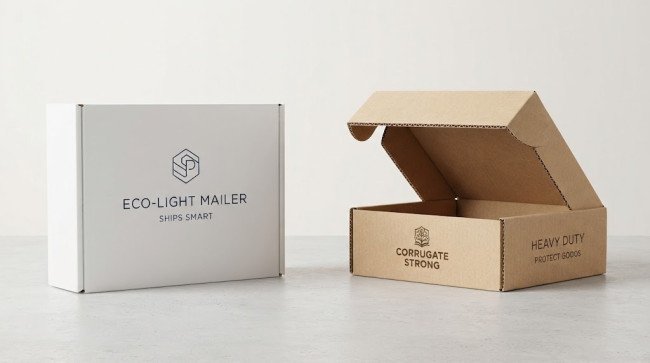
The most important difference is the material construction. In everyday language, both products may be called cardboard boxes, but solid paperboard and corrugated board have different structural properties.
Neither option is automatically better for every business. The right choice depends on the product and the conditions it will experience during delivery.
Which Mailer Box Provides Better Product Protection?
Protection is one of the most important factors when selecting shipping packaging.
Cardboard Mailers for Lightweight Products
Solid paperboard mailers can work well for products that are relatively flat, lightweight, and resistant to damage. Examples include greeting cards, printed brochures, stickers, and selected accessories.
They can also be appropriate when the product already has a protective inner package. However, businesses should consider the risks of bending, moisture exposure, and compression during transportation.
For fragile items or products with projecting parts, a thin paperboard mailer may require additional inserts or an outer shipping carton.
Corrugated Mailers for Shipping Protection
Corrugated mailers are generally better suited to products that need additional structural support during shipping. Their fluted construction helps absorb some impacts and provides resistance to crushing.
For example, a skincare brand shipping several bottles may use a corrugated mailer with fitted inserts to keep the containers separated. A candle business may use corrugated packaging with protective supports to reduce movement around glass jars.
The board grade and flute profile should match the shipment's requirements. Heavy products, fragile glass, and long-distance parcel shipments may need a more robust design than lightweight orders.
Which Option Is Better for Custom Printing and Branding?
Both packaging types can support professional branding, but their surfaces and construction may influence the final design.
Cardboard mailer boxes often provide a smooth surface that works well for detailed artwork, small text, colorful graphics, and product illustrations. They are useful for brands that prioritize a clean retail appearance.
Corrugated mailer boxes can also feature custom printing, including logos, brand colors, promotional messages, and interior graphics. The final print quality depends on the liner, printing method, coatings, and production process.
For example, a stationery company may prefer a printed paperboard mailer with detailed illustrations. An online beauty retailer may choose a custom corrugated mailer with a branded interior and protective inserts.
Both can create a memorable unboxing experience. The best choice balances visual presentation with the protection the product requires.
Size Options for Cardboard and Corrugated Mailer Boxes
Mailer box dimensions should be based on the actual product rather than selected solely by appearance. A well-fitted box can help reduce unnecessary packaging volume and prevent excessive movement.
The following are illustrative size options for planning purposes.
These dimensions are examples, not fixed standards. Available sizes vary by manufacturer, and suppliers may specify internal or external measurements. Always confirm the finished dimensions before approving production.
Which Mailer Box Is More Cost-Effective?
The lowest-priced box is not always the most economical option overall. Businesses should compare the packaging price alongside shipping risks, product damage, storage, packing time, and order quantity.
Cardboard mailers may offer a cost-effective solution for lightweight products that do not need substantial cushioning. Their suitability depends on the board thickness, box dimensions, printing requirements, and production volume.
Corrugated mailers may cost more for some specifications, but the additional structural protection can be valuable when products are vulnerable to crushing or impacts. Reducing damage and replacement shipments may help offset higher packaging costs.
When requesting wholesale quotes, compare boxes with the same dimensions, material specifications, printing requirements, and quantities. This makes the pricing comparison more meaningful.
Which Packaging Should Your Business Choose?
The best choice depends on the products you sell and how they reach your customers.
Choose cardboard mailer boxes when:
-
Your products are lightweight and relatively resistant to damage.
-
You need a smooth surface for detailed printing.
-
Your shipments contain flat goods, stationery, or small accessories.
-
Your existing product packaging provides sufficient protection.
Choose corrugated mailer boxes when:
-
Your products need added structural protection.
-
You ship multiple items in one package.
-
Your orders contain products that can shift or break during transit.
-
Your business needs a versatile shipping package with optional inserts.
Some businesses benefit from using both types. For example, a brand may use paperboard cartons for individual retail products and corrugated mailers to ship those products to customers.
Order Custom Mailer Boxes from Fast Custom Boxes
Fast Custom Boxes offers custom packaging solutions for businesses looking for branded boxes in different styles, materials, and sizes. Whether you need lightweight cardboard mailers for retail products or custom corrugated boxes for shipping, selecting the right construction helps balance appearance, protection, and packaging costs.
Businesses can explore custom printing, suitable dimensions, and packaging options based on their products and order quantities.












Comments
0 comment