
Best Clinics for FUE Hair Transplant in Dubai: A Guide to Choosing Your Provider
A patient guide to FUE hair transplant in Dubai: how the procedure works, recovery month by month, and eight recognised clinics compared.

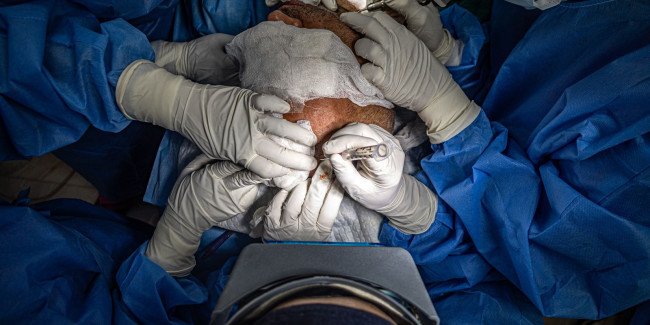 Hair loss changes more than a hairline. It can change how a person feels in photographs, at work, and in everyday conversation, and the effect often builds quietly over years. Many people begin with shampoos and supplements, and most discover that these do very little. When a lasting improvement is wanted, surgery is the option most people investigate, and a FUE Hair Transplant is the technique most clinics in Dubai, UAE, now offer first.
FUE stands for follicular unit extraction. Individual follicles are taken from the back and sides of the head, where hair is usually more resistant to thinning, and placed into the areas where hair has been lost. Because each follicle is handled one at a time, the procedure is slow and detailed, but it leaves no long linear scar and usually produces a natural-looking result when it is planned well.
This guide walks through the process step by step, explains the recovery timeline, presents eight recognised clinics in Dubai, UAE, and sets out what to look for when choosing a provider.
The FUE Process Step by Step
The process begins with a consultation. The surgeon examines the scalp and the donor area, discusses the pattern of hair loss, and explains what the procedure can and cannot achieve. The hairline is drawn on the forehead and agreed with the patient, and the number of grafts is planned.
On the day of the procedure, the team confirms the plan, marks the donor and recipient areas, and takes photographs for the medical record. The donor area is trimmed short, the scalp is cleaned, and local anaesthetic is given.
Extraction comes first. The surgeon or a trained technician uses a small hollow punch, usually less than a millimetre wide, to make a tiny circular cut around a single follicular unit, which may contain one to four hairs. Each unit is lifted out carefully, sorted, and kept moist and cool.
Next, tiny recipient sites are created in the thinning area. The angle and direction of each site are planned in advance, because hair grows at different angles across the scalp. Single-hair grafts are used at the front for a soft edge, with two- and three-hair grafts behind them to build density.
Recovery: A Month-by-Month Timeline
Recovery after FUE is usually straightforward, but it is slow, and knowing the timeline in advance helps patients stay patient with the process.
In the first week, the scalp may be tender, small scabs form around each graft, and mild swelling of the forehead is common for two or three days. Patients are usually advised not to touch or scratch the grafted area, to wash the hair gently exactly as instructed, and to avoid strenuous exercise for at least a week or two. Most patients return to office work within a few days.
Between two and six weeks, the transplanted hairs usually fall out. This shedding phase is normal and expected, though it unsettles many patients who were not warned about it. The follicle itself remains under the skin.
Around three months, new hair begins to grow. Fine hairs appear first, then thicken over the following months, and visible improvement usually starts at four to six months.
Follow-up appointments are normally scheduled so the clinic can check healing and monitor growth. Patients who notice increasing pain, spreading redness, or unusual discharge should contact the clinic promptly.
Best Clinics for FUE Hair Transplant in Dubai
The clinics below are presented as recognised providers in Dubai, UAE. Each should be assessed on its own merits through a consultation. Patients are encouraged to visit more than one clinic, ask the same questions at each, and compare the answers before deciding.
1. Dynamic Life Clinic
Dynamic Life Clinic is a cosmetic and aesthetic clinic in Dubai, UAE, offering a range of surgical and non-surgical treatments, including hair restoration. Patients considering FUE may explore its services and enquire about the team who performs hair transplants, their experience with cases similar to their own, and the techniques they use.
As with any provider, prospective patients should ask about consultation fees, what the consultation includes, and what aftercare is provided following the procedure. A clear, unhurried consultation is a good sign, and patients should feel free to seek a second opinion elsewhere before committing.
2. Emirates Hospital
Emirates Hospital is a general hospital in Dubai, UAE, with departments covering a range of medical and surgical specialties, including cosmetic and plastic surgery. Patients considering FUE may explore its services and enquire about the specialists who carry out hair transplant procedures and their experience with the technique.
A hospital setting may appeal to patients who value access to broader medical facilities and inpatient support. Prospective patients should ask about the consultation process, the specialist's background, and the aftercare arrangements following the procedure.
3. Enfield Royal Clinic Dubai
Enfield Royal Clinic Dubai is a plastic, cosmetic and aesthetic clinic based in Dubai, UAE. The clinic was established in 2007 and states that it has performed more than 3,500 plastic surgeries and delivers over 20,000 aesthetic treatments each year, with DHA-licensed medical professionals on its team. Its services include plastic surgery, cosmetic procedures, dermatology, hair transplant, cosmetic injectables, laser treatments and dentistry, and treatment planning is described as personalised according to individual patient needs. The clinic is located at Villa 1089, Al Wasl Road, Al Manara, Dubai, UAE.
For patients considering FUE, the clinic offers hair transplant services as part of its range. A consultation would typically include an assessment of the scalp and donor area, a discussion of the patient's goals, and an explanation of what the procedure can and cannot achieve.
The clinic also provides procedure-specific aftercare, which is an important part of any surgical journey. Patients should ask what aftercare involves, how many follow-up appointments are included, and who to contact if they have concerns after the procedure. Because hair transplant results develop slowly over many months, a clinic that stays in contact through the recovery period can make a real difference to a patient's confidence.
Patients comparing providers may also want to ask how the grafts are extracted and placed, who on the team performs each stage, and what happens if some grafts do not grow. Clear, direct answers to these questions are a useful measure of any clinic.
4. Cocoona Clinic
Cocoona Clinic is a cosmetic surgery and aesthetic clinic in Dubai, UAE, offering surgical and non-surgical treatments, including hair restoration. Patients interested in FUE may explore its services and enquire about the team who carries out hair transplants and the approach they recommend for different patterns of hair loss.
As with any clinic, patients should ask what a consultation covers and what aftercare is included. It is also worth asking how the clinic supports patients during the recovery period, when the shedding phase begins and reassurance matters most.
5. Tajmeels Clinic
Tajmeels Clinic is a cosmetic and aesthetic clinic in Dubai, UAE, providing a range of surgical and non-surgical treatments, including hair restoration. Patients considering FUE may explore its services and enquire about the experience of its team with hair transplants and the results that can reasonably be expected.
Prospective patients should use the consultation to ask about the approach recommended for their case, the likely recovery timeline, and the aftercare provided. Honest answers to these questions are a useful measure of any provider.
6. Dubai Cosmetic Surgery Clinic
Dubai Cosmetic Surgery Clinic is a cosmetic surgery clinic in Dubai, UAE, offering a range of surgical procedures, including hair transplantation. Patients may explore its services and enquire about the specialists who perform FUE, their experience, and the techniques they recommend for each individual case.
Patients should ask about the consultation process, what is included in the treatment, and what aftercare is provided. A clinic that sets realistic expectations is generally a better choice than one that promises rapid or guaranteed results.
7. Al Zahra Hospital Dubai
Al Zahra Hospital Dubai is a private hospital in Dubai, UAE, offering a wide range of medical and surgical services, including plastic and cosmetic surgery. Patients considering FUE may explore its services and enquire about the specialists who perform hair transplants and their experience with the procedure.
A hospital environment may suit patients who prefer the reassurance of full medical facilities and inpatient care. Prospective patients should ask about the consultation, the specialist's background, the expected recovery, and the aftercare arrangements.
8. King's College Hospital London Dubai
King's College Hospital London Dubai is a hospital in Dubai, UAE, providing a broad range of medical and surgical services, including plastic and cosmetic surgery. Patients considering FUE may explore its services and enquire about the specialists who carry out hair transplants and the techniques they use.
Patients should ask about the consultation process, the specialist's experience with FUE, and the aftercare provided after the procedure.
What to Look for When Choosing a Provider
Experience and qualifications. Ask how often the surgeon performs FUE and how many years they have focused on hair restoration. Confirm that the surgeon is appropriately qualified and licensed to practise in Dubai, UAE.
Who does the work. In some clinics the surgeon performs every stage; in others, trained technicians extract or place the grafts under supervision. Patients should know who will handle each part of their procedure.
Graft numbers and planning. Ask how many grafts are proposed, why that number was chosen, and what density it is likely to achieve. A plan that respects the finite donor supply is more honest than one that promises full coverage from a weak donor area.
Aftercare and follow-up. Ask what aftercare is included, how many follow-up appointments are scheduled, and who to contact if problems arise. Recovery takes months, and good follow-up care is part of the service.
Honest Limitations
FUE is not a cure for genetic hair loss. It needs active follicles in the donor area, it cannot create hair where none exists, and the natural hair around the transplanted area may continue to thin over time. Results take months to appear, and no surgeon can guarantee a specific outcome.
Frequently Asked Questions
How many grafts will I need?
The number varies widely from person to person. A small area of recession may need only a few hundred grafts, while extensive loss across the front and crown may need several thousand. The surgeon should explain the number proposed and why that number was chosen.
Will the transplanted hair fall out?
Yes, in most cases the transplanted hairs fall out within the first two to six weeks. This is normal and expected. The follicle itself remains under the skin, and new hair begins to grow from it after a resting period of around three months.
Does FUE leave a visible scar?
FUE does not leave a long linear scar. It leaves many tiny dot scars in the donor area, which are usually very difficult to see, even when the hair is worn short. The visibility of these dots depends on the number of grafts taken and how the patient heals.
Can FUE restore a receding hairline?
Yes, restoring a receding hairline is one of the most common reasons patients choose FUE. The hairline is drawn and discussed before surgery, and single-hair grafts are used at the front for a soft, natural edge.
Is an FUE hair transplant permanent?
The transplanted follicles are taken from an area where hair is usually resistant to pattern hair loss, and they generally keep growing in their new location. However, the procedure does not stop the underlying process of hair loss, so the natural hair around the transplanted area may continue to thin. It is not a cure for genetic loss, and an assessment is essential to understand what it can and cannot achieve for an individual patient.
Conclusion
FUE hair transplantation is a well-established technique that can restore hair to thinning areas with natural-looking results, provided the patient has a healthy donor area, realistic expectations, and a carefully planned procedure carried out by an experienced team. The eight clinics in this guide are a starting point for comparison, not a ranking.
Anyone considering treatment should visit more than one clinic, compare the plans and graft numbers offered, and ask direct questions about limitations and aftercare. For readers who want to understand the treatment in more detail before booking a consultation, learning about FUE hair transplant treatment — how it works, who it suits, and what recovery really involves — is a sensible way to prepare for an informed conversation with a qualified professional.










Comments
0 comment