
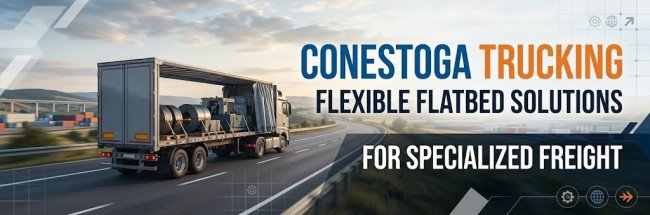
Conestoga Trucking: Flexible Flatbed Solutions for Specialized Freight
A conestoga truck is a specialized freight vehicle equipped with a sliding tarp system that covers the trailer from front to rear.

Moving oversized, long, tall, or difficult-to-handle freight requires the right equipment and reliable transportation planning. Conestoga trucking provides a practical solution for shippers and businesses that need the flexibility of a flatbed while also protecting their cargo from weather and road conditions. With a sliding tarp system, a conestoga truck can provide convenient loading access while keeping freight covered during transportation.
For businesses comparing conestoga trucking companies, understanding how this equipment works and when to use it can help simplify freight planning. Conestoga trailers are particularly useful for machinery, building materials, industrial equipment, steel products, lumber, and other freight that may require side or overhead loading.
What Is a Conestoga Truck?
A conestoga truck is a specialized freight vehicle equipped with a sliding tarp system that covers the trailer from front to rear. Unlike a traditional enclosed trailer, the tarp can be moved to provide access to the entire trailer bed.
This design combines some of the accessibility benefits of a flatbed with the added protection of a covered trailer. Freight can often be loaded from the side, rear, or top depending on the equipment and shipment requirements.
The result is a versatile transportation option for cargo that needs protection but cannot easily be loaded into a conventional dry van.
How Flatbed Conestoga Trailers Work
A flatbed conestoga trailer typically uses a retractable framework and tarp system. The framework moves along the trailer, allowing the tarp to open or close as needed.
When loading is required, the system can be moved aside to expose the trailer deck. After the freight is properly secured, the tarp can be pulled back over the cargo.
This setup can make freight handling more convenient for certain shipments. It also helps reduce exposure to rain, snow, dust, and other environmental conditions during transportation.
For shippers dealing with large or unusual freight, a conestoga flatbed can offer a useful balance between accessibility and cargo protection.
When Should You Use Conestoga Trucking?
Conestoga equipment can be suitable when standard enclosed trailers do not provide enough loading flexibility and traditional flatbeds do not provide the desired level of weather protection.
Common freight transported using conestoga equipment includes:
- Industrial machinery and equipment
- Construction materials
- Steel and metal products
- Lumber and building supplies
- Manufacturing components
- Large commercial equipment
- Palletized freight requiring specialized loading
The right trailer depends on the dimensions, weight, loading method, destination, and handling requirements of the shipment. Before booking transportation, shippers should provide accurate cargo information so the appropriate equipment can be arranged.
Benefits of Conestoga Trucking
One of the main advantages of conestoga trucking is flexibility. The sliding tarp allows access to the trailer deck without requiring the freight to be loaded through a standard trailer door.
Another benefit is cargo protection. Traditional flatbed freight is exposed to the elements unless additional covering is used. A Conestoga system provides an integrated tarp that can help protect cargo throughout transportation.
Conestoga equipment can also help simplify certain loading operations. When freight requires overhead or side access, having an opening trailer deck can make loading and unloading more practical.
For businesses regularly shipping specialized freight, working with experienced conestoga trucking companies can also make equipment selection and transportation coordination easier.
Choosing the Right Conestoga Trucking Company
When selecting a provider, businesses should look beyond basic transportation availability. The carrier or dispatching partner should understand the requirements associated with specialized freight and the equipment needed for the shipment.
Important factors to consider include equipment availability, service coverage, experience with specialized loads, communication, scheduling, and the ability to coordinate pickup and delivery requirements.
It is also important to provide complete shipment details before transportation is arranged. Cargo dimensions, weight, loading method, pickup location, delivery location, and special handling requirements can all affect equipment selection.
A clear understanding of these details helps reduce avoidable delays and ensures the shipment is matched with suitable transportation.
Conestoga vs. Traditional Flatbed
A traditional flatbed provides an open trailer deck and is often suitable for freight that requires easy side, rear, or overhead loading. However, cargo may require additional protection from weather.
A flatbed conestoga provides similar loading flexibility while incorporating a retractable tarp system. This can make it a practical option when freight needs both accessibility and additional protection.
Neither option is appropriate for every shipment. The best choice depends on the cargo and the specific transportation requirements.
Reliable Conestoga Trucking for Specialized Freight
Specialized freight requires careful planning from pickup through final delivery. The right conestoga truck can provide the loading flexibility needed for difficult freight while offering additional protection compared with an uncovered flatbed.
Whether you are transporting industrial equipment, construction materials, machinery, or other specialized cargo, understanding your equipment requirements is an important part of successful freight transportation.
Working with experienced conestoga trucking companies can help businesses coordinate suitable equipment, shipment requirements, and transportation schedules more efficiently.
Frequently Asked Questions
What is a Conestoga truck?
A Conestoga truck is a trailer equipped with a retractable tarp system. The tarp can be opened to provide access to the trailer deck and closed to protect cargo during transportation.
What is a Conestoga flatbed?
A Conestoga flatbed combines the open loading access of a flatbed trailer with a sliding tarp system. It can be useful for freight that needs flexible loading and additional weather protection.
What freight can be transported with Conestoga trucking?
Conestoga equipment can transport various types of specialized freight, including machinery, construction materials, steel products, lumber, industrial components, and other large or difficult-to-load cargo.
Is a Conestoga better than a traditional flatbed?
The appropriate equipment depends on the shipment. A Conestoga can be useful when cargo requires flatbed-style loading access along with protection from weather and road conditions.
How do I choose among Conestoga trucking companies?
Consider the provider's equipment availability, specialized freight experience, service coverage, communication, scheduling capabilities, and understanding of your shipment requirements.
Does a Conestoga protect freight from weather?
The retractable tarp system is designed to cover the cargo and provide protection from common weather and environmental exposure during transportation. Specific protection depends on the trailer and shipment conditions.












Comments
0 comment