
Why Are Tight Tolerances Important in Modern Component Manufacturing?
Learn why tight tolerances matter in modern manufacturing and how CNC Swiss machining helps produce accurate, repeatable components. Discover how precision machining, inspection, and process control support reliable part performance.

A component can look perfect and still be wrong. That sounds a little strange, but anyone who has worked around machining knows it happens. A hole might be a fraction too small. A shaft could be just slightly oversized. On a normal ruler, you would never notice it. In an actual machine, you might notice it immediately. For a CNC turned parts manufacturer, this is why tolerance is such a big deal. Modern equipment is expected to run smoothly, safely, and for long periods, and the parts inside it have to cooperate. There isn't much room for guesswork. One small dimensional difference can change how a whole assembly fits, moves, or handles pressure.
So, What Does Tight Tolerance Really Tell Us?
Tolerance is simply the amount a measurement is allowed to move away from its specified size. Say an engineer puts a dimension on a drawing and gives it a very narrow acceptable range. The machinist has to keep the finished part inside that window. Easy on paper. Real life is messier. Metal expands when it gets hot. Cutting tools wear down. Machines vibrate. Different materials cut differently. Even the person checking the finished part can get a different reading if the measurement method isn't consistent. Tight tolerance machining means keeping those little variables under control, again and again, not just getting lucky once.
A Good Fit Starts With Accurate Parts
Most machined components don't live by themselves. They get assembled with something else. A pin goes into a hole. A shaft sits inside a bearing. Threads have to engage properly. Two surfaces may need to slide against one another without binding. If the dimensions are off, problems show up during assembly pretty quickly. Too tight and the part may refuse to fit. Too loose and you can get movement, noise, vibration, or premature wear. Nobody wants an expensive production line stopping because two parts that were supposed to fit together... don't. Proper tolerances give manufacturers a much better chance of getting that fit right from the beginning.
Repeatability Is Where Precision Gets Serious
Producing one accurate part isn't especially impressive if the next twenty are different. Production manufacturing needs consistency. That means the first component, the middle of the batch, and the last component should stay within the required dimensional limits. CNC machines are useful here because a controlled program can be repeated without somebody manually guiding every cut. Still, the machine isn't doing all the thinking. Tool wear has to be watched. Setups need to be stable. Workholding needs to be solid. Coolant and cutting conditions can affect the process too. Ignore those things and tolerance starts drifting. Usually it doesn't happen with a dramatic warning. It creeps in.
Not Every Part Needs Extreme Precision
This point gets overlooked. Tighter isn't automatically better. If a component doesn't need a very narrow tolerance, forcing one onto the drawing can make manufacturing more expensive for no real benefit. A basic bracket, spacer, or non-critical surface may work perfectly well with a broader dimensional range. A bearing seat is a different story. So is a sealing surface or a component that has to interact with another precision part. Engineers have to decide where accuracy is genuinely needed. The smartest approach isn't chasing the smallest possible number everywhere. It's putting precision where it has a job to do. That's a much more practical way to manufacture things.
CNC Equipment Helps, But People Still Matter
Modern CNC technology has made close dimensional control much more achievable. Machines can follow detailed toolpaths, repeat operations, and handle geometries that would be awkward to produce manually. But here's the part that sometimes gets skipped in the marketing talk: a CNC machine doesn't automatically create a perfect component. Somebody still has to choose the tooling, set the workpiece correctly, establish the cutting conditions, and understand the material. An experienced machinist can often spot trouble before the inspection report does. Maybe the finish starts looking different. Maybe a tool is making a sound it shouldn't. Those little signs matter when you're working with demanding tolerances.
Measurement Proves Whether the Part Is Actually Right
Machining and inspection are really two halves of the same process. You can make what looks like a beautiful component, but if you haven't checked the critical dimensions, you don't really know where it stands. Depending on the job, manufacturers may use micrometers, gauges, calipers, coordinate measuring machines, and other inspection equipment. The important thing is that the measurement method matches the tolerance being checked. A rough check isn't enough when the specification is extremely narrow. In-process inspection can also help catch dimensional drift while production is still running. Finding a problem after 2,000 parts have been made is a very different situation from finding it after 20.
There Is a Cost to Chasing Tiny Numbers
Very tight tolerances can take more time and effort to achieve. Sometimes the machine has to run slower. Better tooling may be needed. Extra finishing or inspection steps can enter the process. That all costs money. This doesn't mean manufacturers should avoid precision. Far from it. It means the tolerance should make sense for the component. If a dimension has no effect on the part's function, spending heavily to hold an ultra-tight limit doesn't suddenly make the product better. On the other hand, when a few thousandths can affect sealing, movement, or alignment, paying for that control may be necessary. Manufacturing is full of these trade-offs.
Precision Will Keep Shaping Component Manufacturing
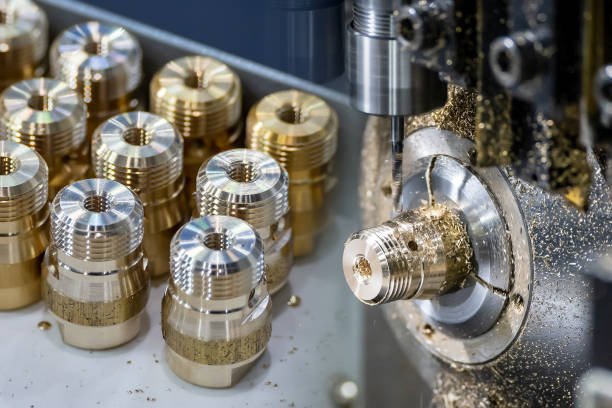
The demand for accurate components isn't going away. If anything, it's becoming more noticeable as machines get smaller, faster, and more complicated. Components have to fit into tighter spaces, work with other highly engineered parts, and maintain performance over time. Technologies such as CNC Swiss machining are particularly useful for small, detailed components where repeatability and dimensional control are important. But technology alone isn't the whole answer. Good drawings, suitable tolerances, stable machining processes, and proper inspection all have to work together. The short answer is pretty simple: tight tolerances matter because real machines don't have much patience for almost-right parts. Sometimes that tiny difference is exactly where the problem starts.











Comments
0 comment