
Clash between Federal and State Tax Rules, Non-Conformity Gap
Federal tax changes do not always apply in California. Understand FTB non-conformity, how it can affect deductions, depreciation, exemptions, Schedule CA adjustments, and your state tax liability.

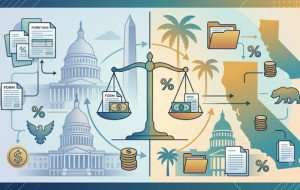
A federal tax break is generally assumed to roll over to the California tax return. This is an assumption that can cost you a lot of money. Generally, California follows the Internal Revenue Code as it stood on a certain date and has its own changes.
The general conformity date for California, for tax years beginning in 2025, is January 1, 2025, which means that later federal legislation, such as the One Big Beautiful Bill Act (OBBBA), generally will not be automatically adopted.
The Federal-State Gap Matters
The OBBBA had a lot of federal tax changes to bring about, and the California Revenue and Taxation Code has said it doesn't really meet the OBBBA standard. Taxpayers may therefore require adjustments for California even if the changes in their deductions/exclusions are reflected in their federal return.
This can impact individuals and businesses in a variety of ways, such as differences in deductions, income exclusion, depreciation, and other tax provisions. California has a history of having distinct depreciation rules, for instance, and is not bound by some of the federal bonus depreciation rules. Get an experienced tax professional (like a tax lawyer in Richmond, CA) for some help.
Schedule CA (540)-The roles of it
The amounts a taxpayer receives on their federal return are generally the first amounts that are listed on their California return, followed by state-specific adjustments on Schedule CA (540), California Adjustments.
These changes may either raise or lower California taxable income. If the taxpayer merely copies the federal numbers on the state return, he might be left with an unexpected balance due, interest, or penalties.
These are some typical problem areas:
· California doesn't allow these federal deductions.
· California doesn't recognize certain federal income exclusions.
· The use of different depreciation and amortization methods.
· Business deductions impacted by California's nonconformity rules.
· Unadopted provisions of OBBBA.
The following is a list of do's and don'ts for California taxpayers.
Do:
· Compute federal AGI and CA taxable income separately.
· Check required additions and subtractions in Review Schedule CA (540).
· Before claiming a new big federal tax benefit, review the current FTB guidance.
· Use separate federal and California depreciation schedules if necessary.
· Check for additional adjustment information for California state in FTB Publication 1001.
Don’t:
· Enforce a new federal tax exemption as if it were in California.
· Assume that federal accelerated depreciation is applicable to the California return.
· Copy federal deductions straight down to Form 540, without checking conformity in California.
· Wait until receiving an FTB notice to investigate differences.
Here are some tips to avoid a surprise bill when you receive your California tax bill.
Compare large federal tax changes to the existing conformity requirements in California prior to filing. This is especially crucial if you have a significant amount of business deductions, depreciation, or new federal benefits. Consult with a professional (similar to a tax attorney in Roseville, CA) and get the help you want.
Maintain a copy of your federal return, Schedule CA, depreciation calculations, supporting receipts, and worksheets. If a federal provision doesn't get adopted in California, record the adjustment, not that you assume your tax software has gotten every adjustment correct.
The bottom line: Federal tax reform equals California tax reform first and foremost. Knowing about the non-conformity gap and making sure to take the time to compare federal AGI and California adjustments closely could help taxpayers avoid being underpaid, accruing interest, penalties, and potential unpleasant surprises from the FTB.











Comments
0 comment